
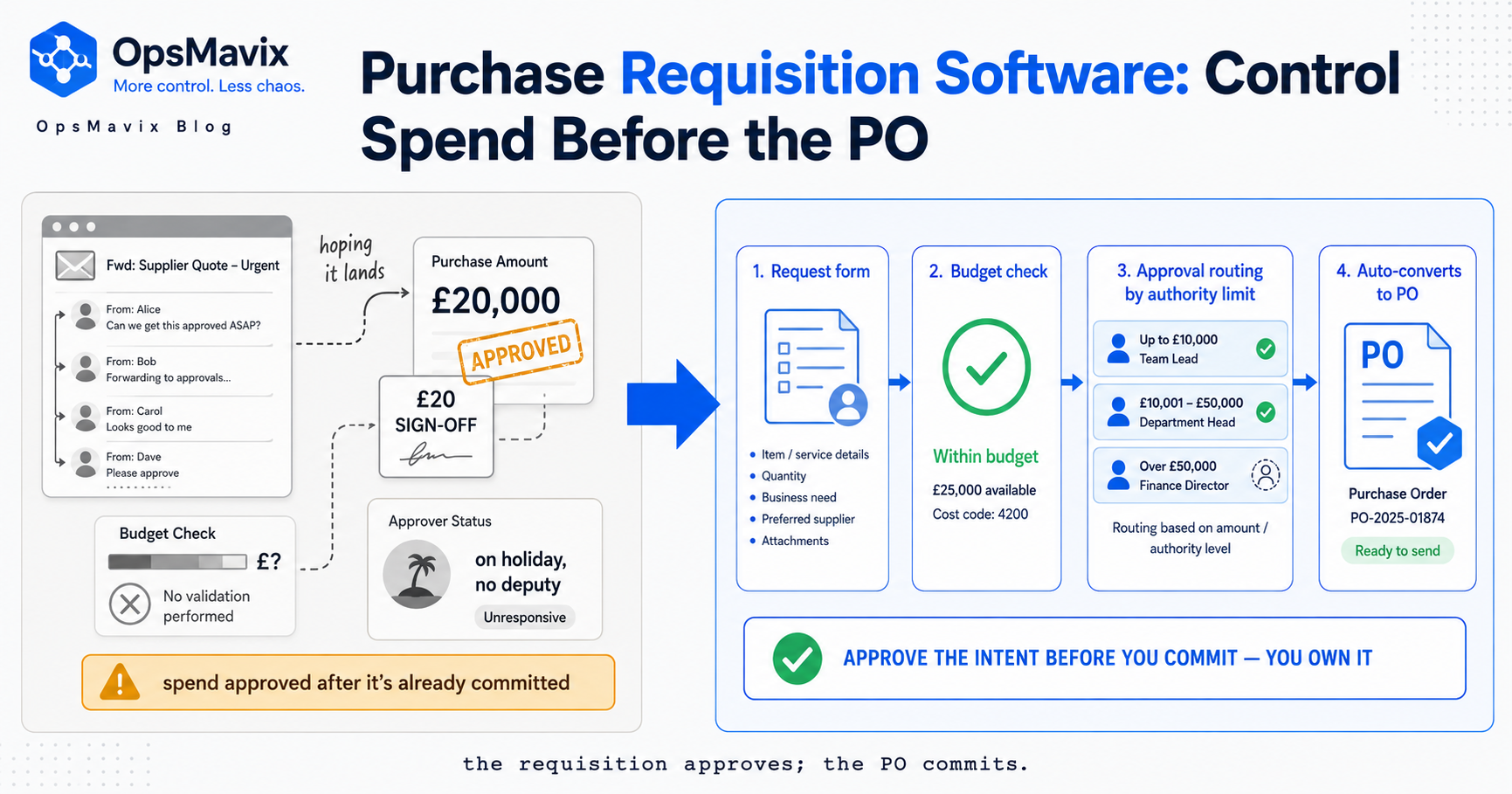
Purchase Requisition Software: Controlling Spend Before the PO Goes Out
Purchase requisition software is the tool that runs request-to-buy — the form, the budget check, the approval routing and the authority limits — so spend is approved before a purchase order commits it. This is a buyer's guide to what that software actually has to do, where the off-the-shelf procurement suite is overkill and where the accounts add-on is too thin, and when a right-sized custom requisition system beats both.
Mintsoft Competitors: The 3PL & Multichannel OMS Landscape (and Where a Build Fits)
Mintsoft competitors split into a few camps — 3PL fulfilment platforms like Fulfillor, multichannel order tools like Linnworks and Veeqo, and the heavier enterprise tier of OrderWise and full ERP/WMS suites. This is an even-handed map of who each one suits and where it stops, a straight Fulfillor vs Mintsoft comparison, when a 3PL should stay on Mintsoft versus look elsewhere, and where a custom build fits for operations that have outgrown the box.
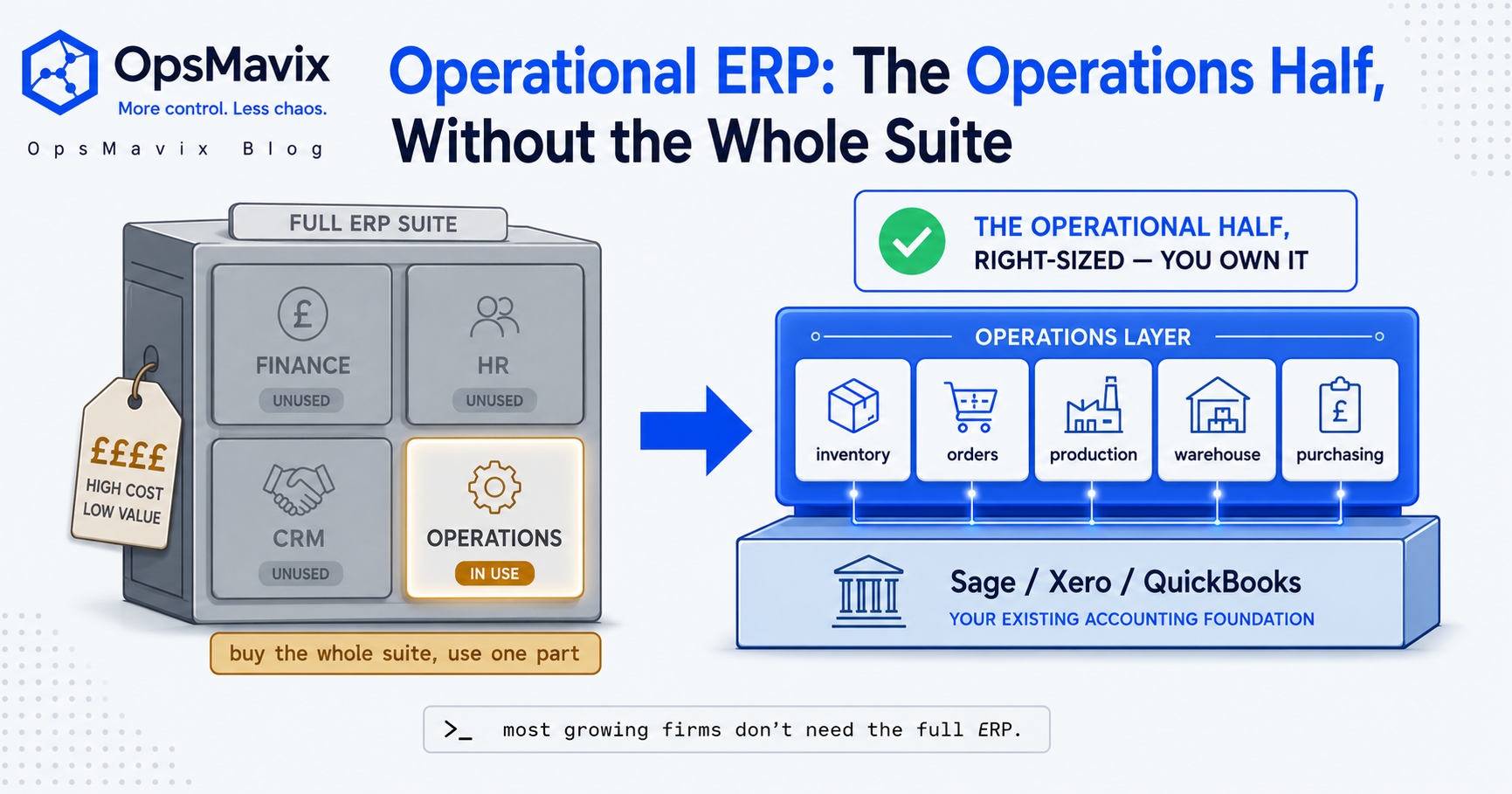
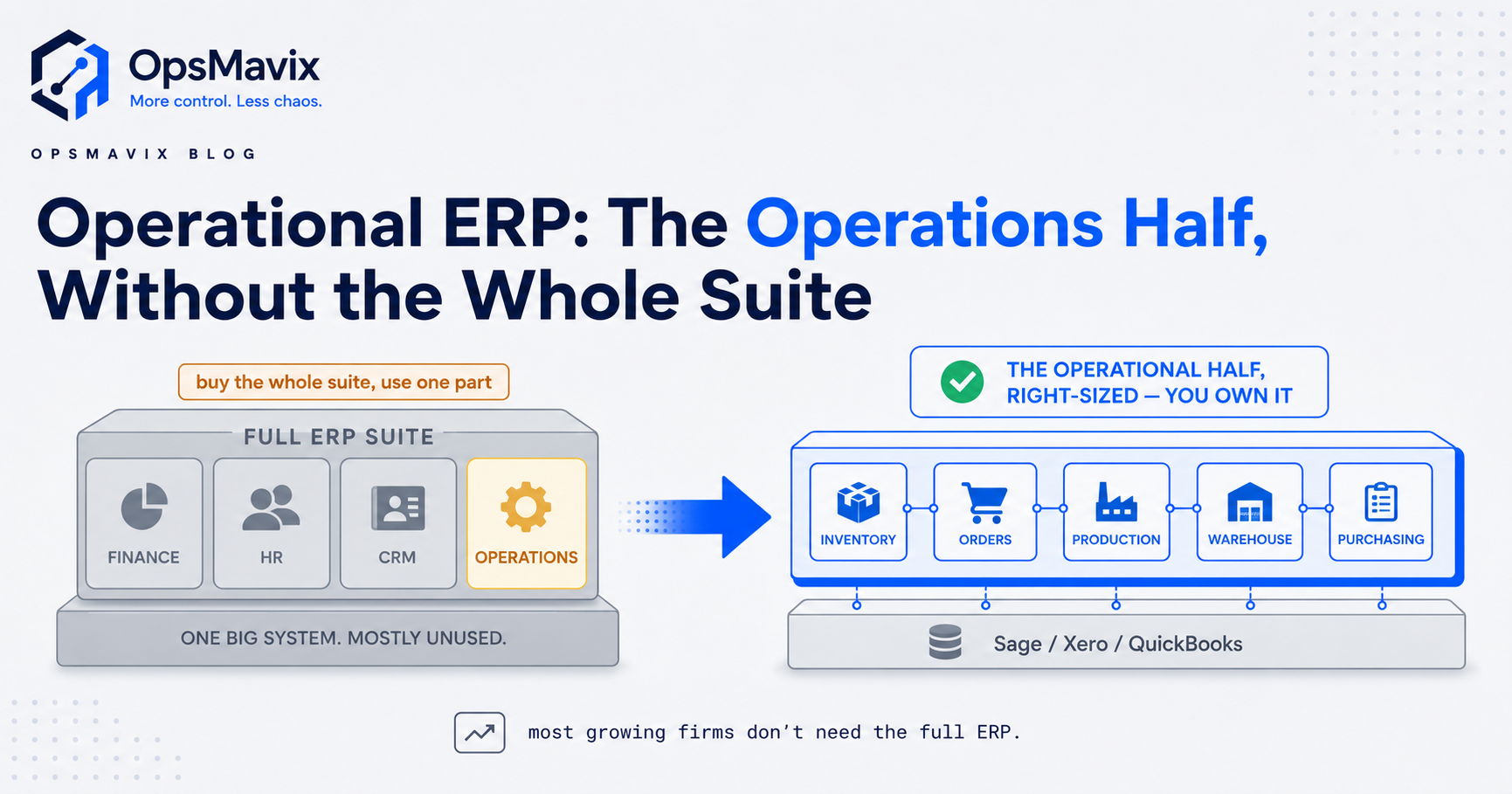
What Is Operational ERP? (And Why Most Growing Businesses Don't Need the Whole Thing)
Operational ERP is the operations half of an ERP system — the inventory, orders, production, warehouse and procurement capability, as opposed to the finance and accounting core most people picture when they hear "ERP". This post defines operational ERP as a category, walks the functions it actually covers, and gets to the buying decision underneath the term: most growing businesses need the operational capability, not a full finance suite with modules bolted on.
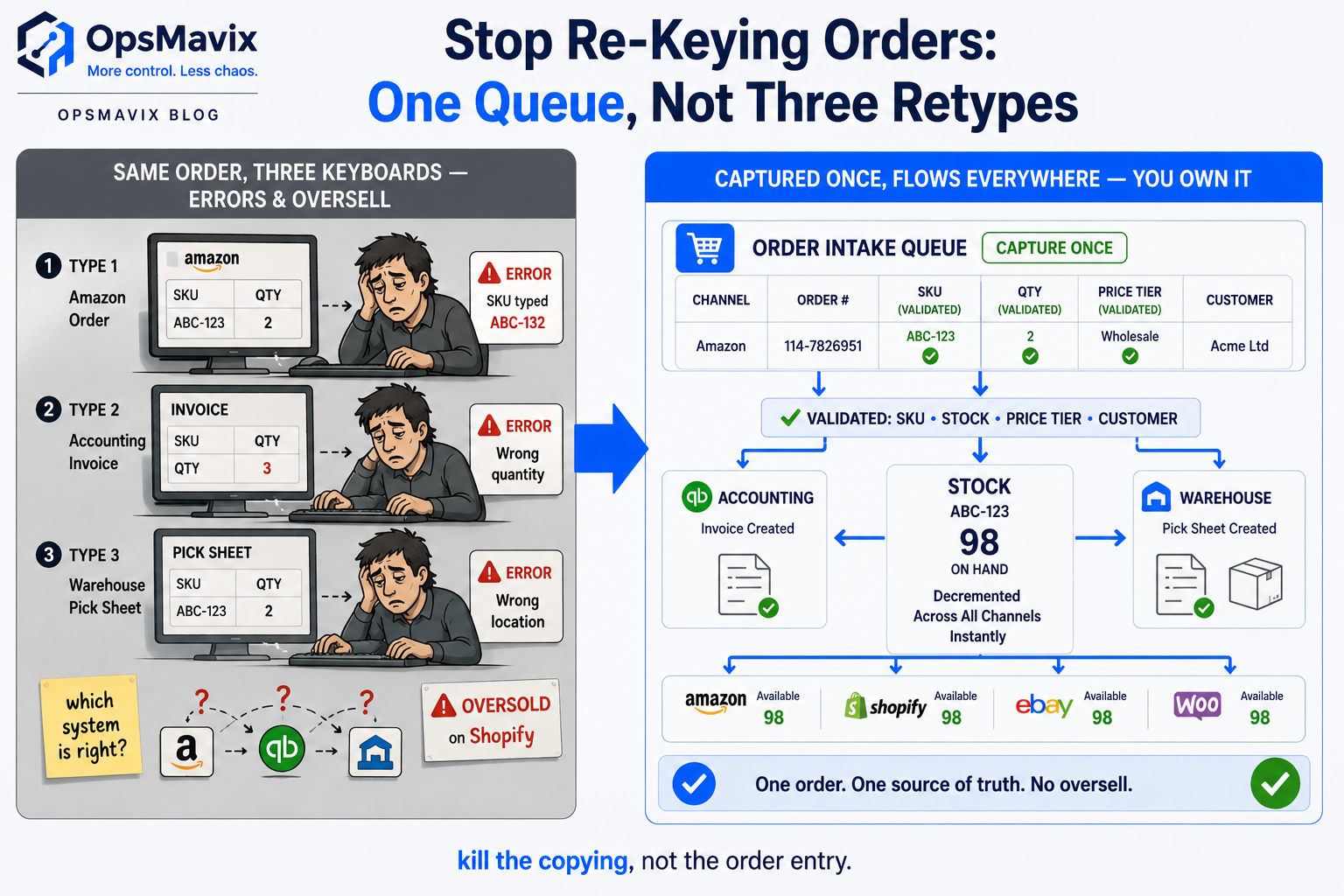
Stop Re-Keying Orders: One Queue Instead of Three System Retypes
Re-keying orders means typing the same order twice or three times — off the marketplace, into the accounting system, then again into the warehouse or picking sheet. Every retype is a fresh chance to fingerslip a SKU or a quantity, and the hours add up week after week. You stop it by making orders flow once: one intake queue that pushes the order downstream automatically, so no human ever copies it from one screen to another. Here's where the re-keying hides, what it costs, and how to close it.
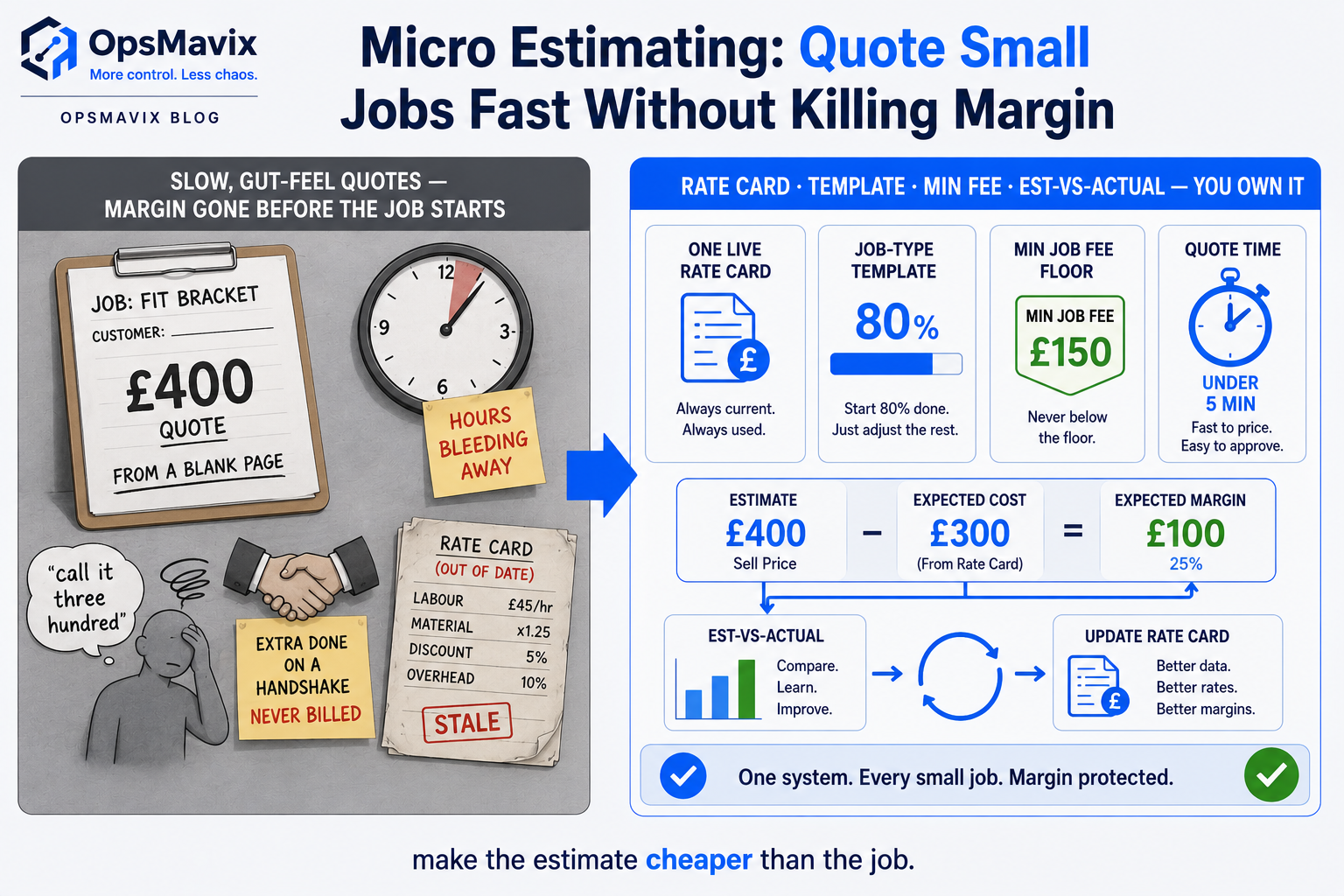
Micro Estimating: How to Quote Small Jobs Fast Without Killing the Margin
Micro estimating is the discipline of pricing small, frequent or repeat jobs fast — using standard rates, templates and unit costs so a £400 job doesn't need a £150 quote to win it. It's not a piece of software; it's a method for making the estimate cheaper than the work, protecting margin on the jobs most businesses quietly lose money on. Here's how the method actually runs, and the point where a spreadsheet stops being enough and a system earns its place.
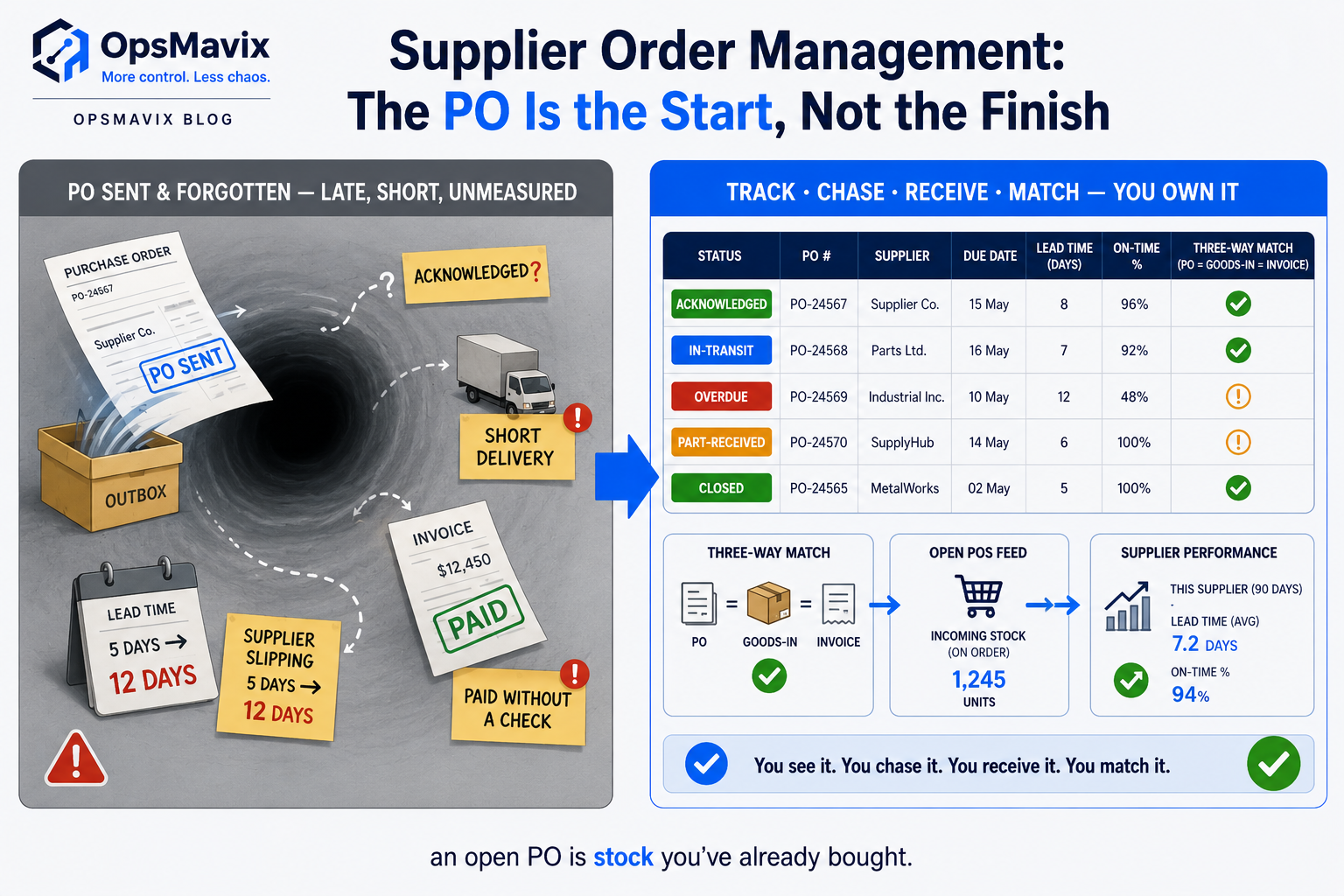
Supplier Order Management Software: Running the Inbound Side End-to-End
Supplier order management software isn't about raising a purchase order — it's about everything that happens after you send it. The acknowledgement that never came, the lead time nobody's tracking, the delivery that turned up short, the invoice that doesn't match what you ordered. Creating the PO is one document; managing the supplier and the inbound order over time is the capability that actually keeps stock on the shelf. Here's what that capability has to do, and where a right-sized system beats both the spreadsheet and the ERP.
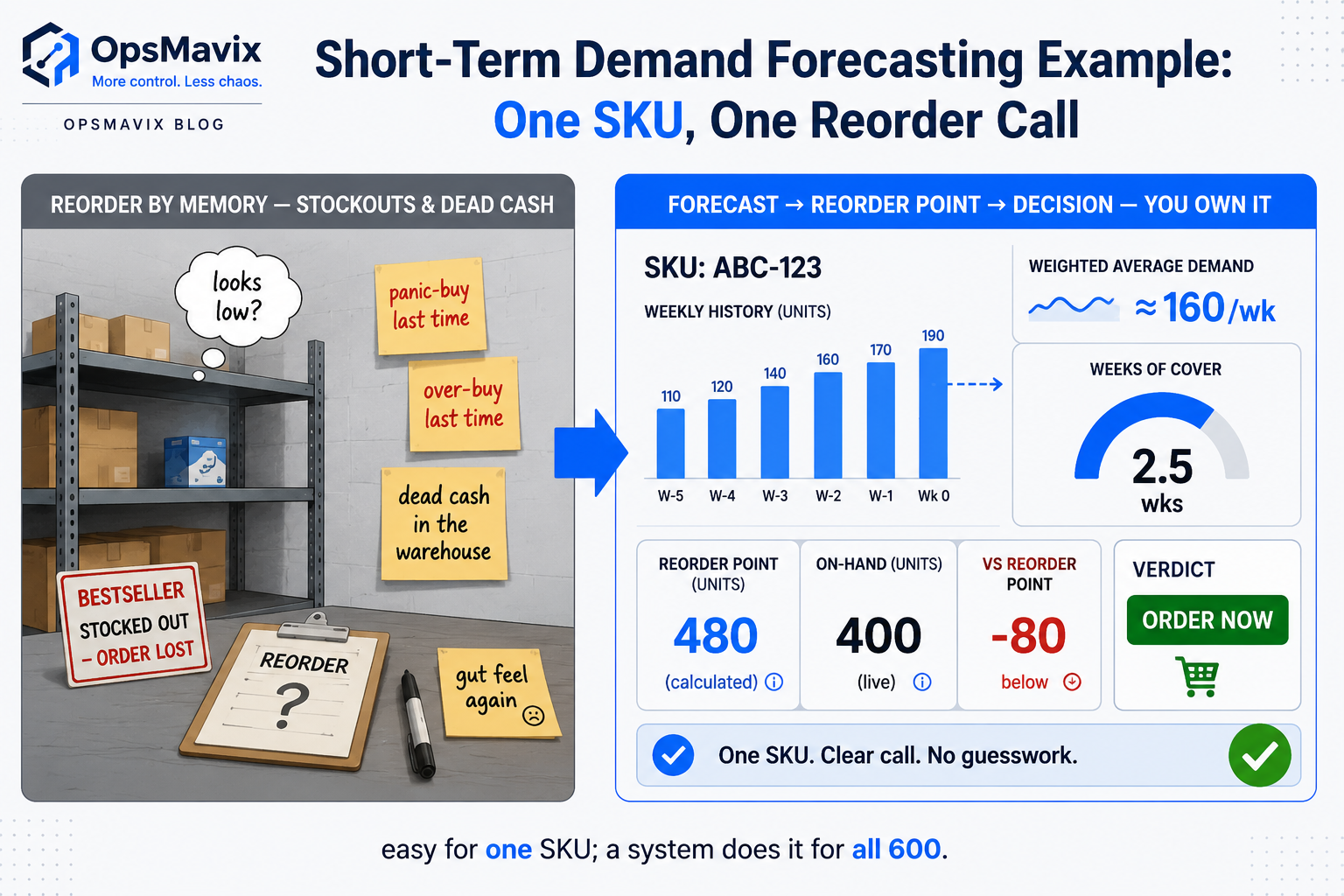
Short-Term Demand Forecasting Example: One SKU, Real Numbers, One Reorder Decision
Most demand-forecasting articles explain the theory and stop. This one runs the numbers. We take a single stock item, six weeks of real sales, and walk it through a weighted moving average, weeks of cover, and a reorder point — until it produces one concrete decision: order now, or wait. If you can do it for one SKU on paper, you can see exactly what a system should be doing for all of them automatically.
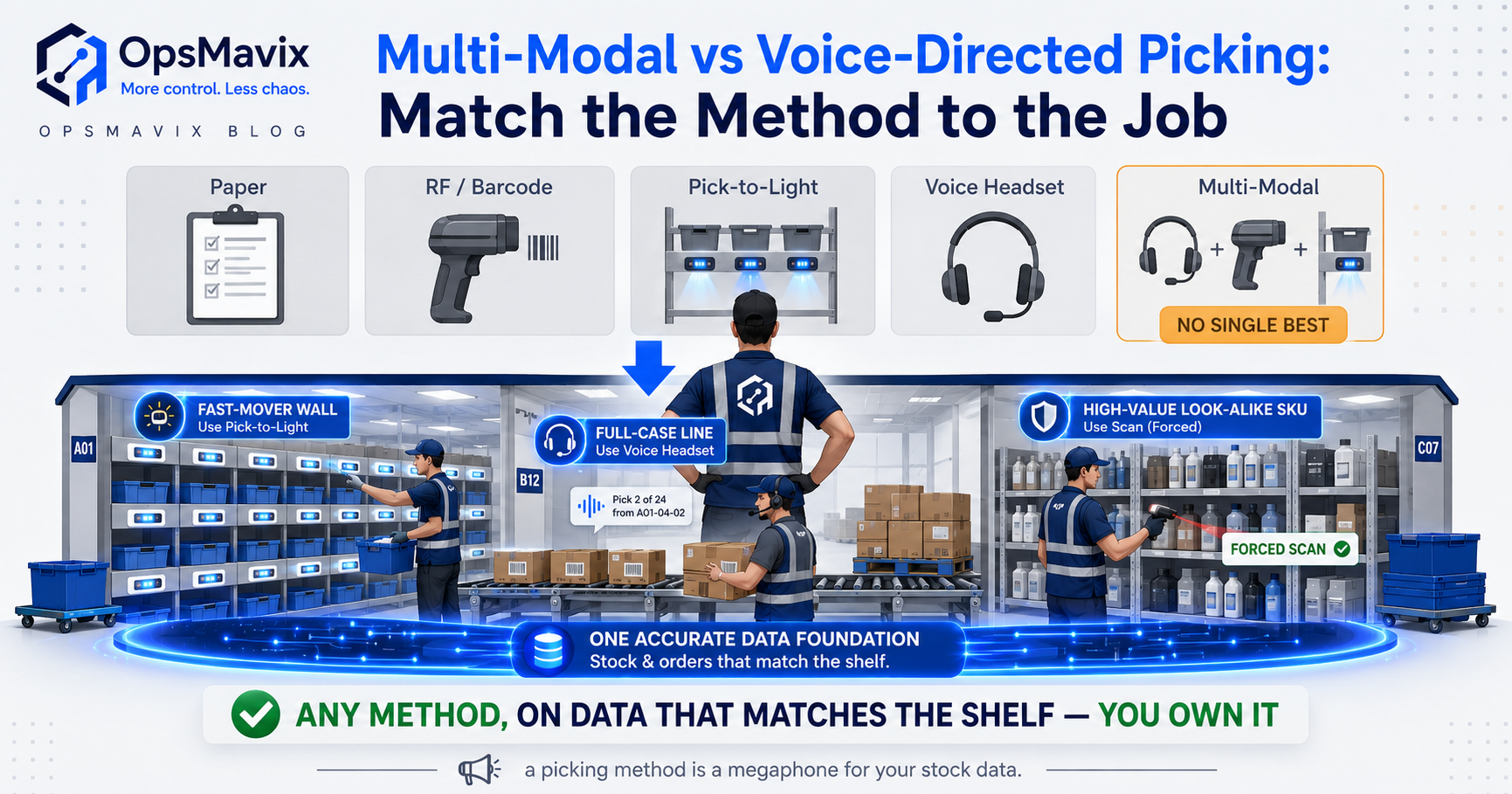
Multi-Modal vs Voice-Directed Picking: A Warehouse Method Decision Guide
Multi-modal vs voice-directed picking comes down to one choice — do you want a single hands-free voice mode, or voice plus scan plus screen so pickers switch to whatever's fastest and safest per task. But that's the last decision, not the first. Voice, multi-modal, RF, pick-to-light and paper all sit on top of the same thing: the stock and order data underneath. Get that wrong and no picking method saves you. Here's when each one fits, the trade-offs nobody tells you, and the layer that actually decides whether any of them work.
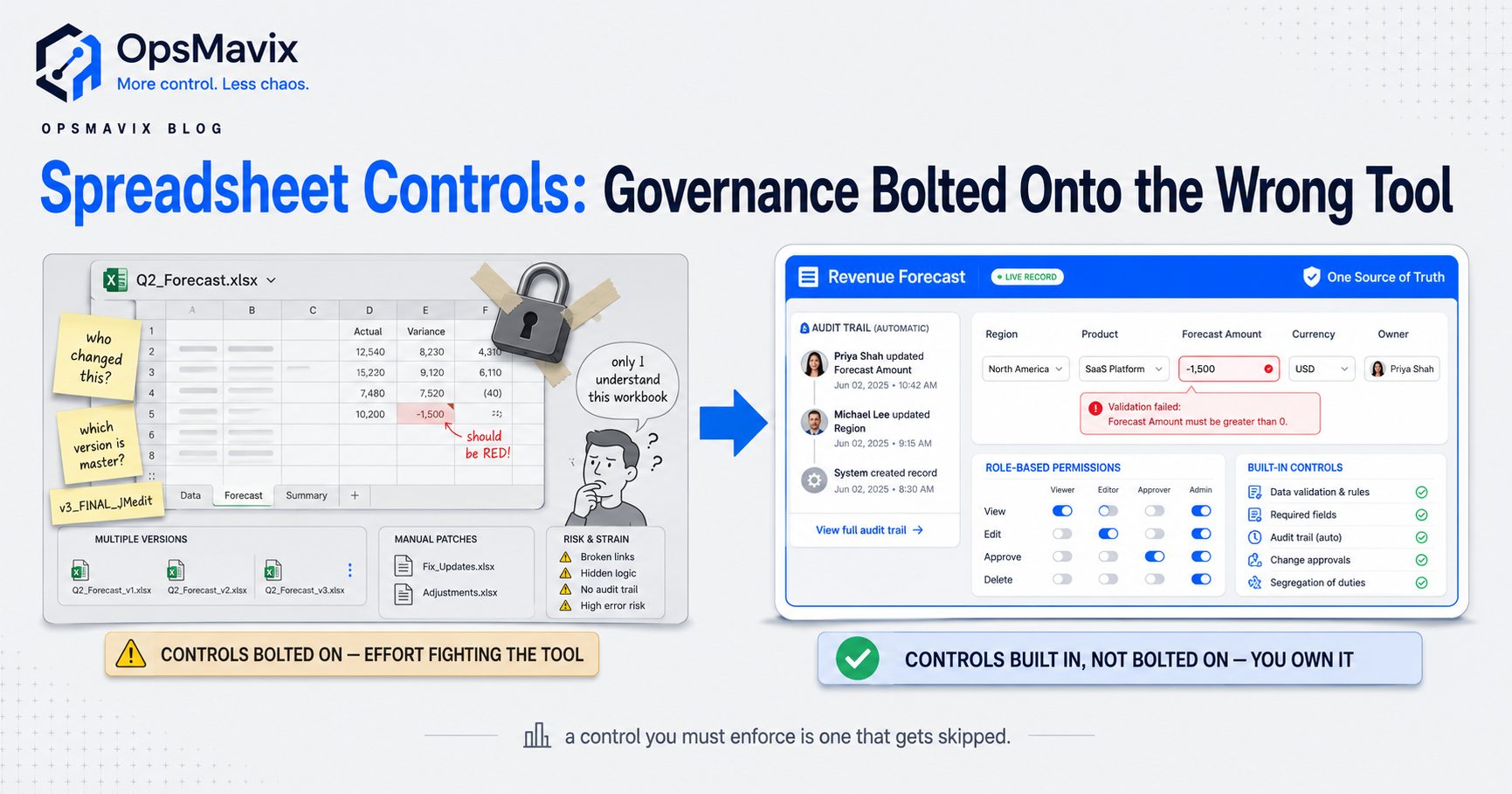
Spreadsheet Controls: Why Bolting Governance Onto Excel Fights the Tool
Spreadsheet controls are the access restrictions, version control, change management and formula reviews businesses bolt onto their critical spreadsheets to reduce the risk of a costly error or an untraceable change. They exist because a spreadsheet has almost none of these protections built in — anyone can overwrite anything, and nobody can prove what changed or when. Here's what real controls look like, why the good ones are hard to enforce on a spreadsheet, and what changes when your operations live in a system that enforces them by default.