
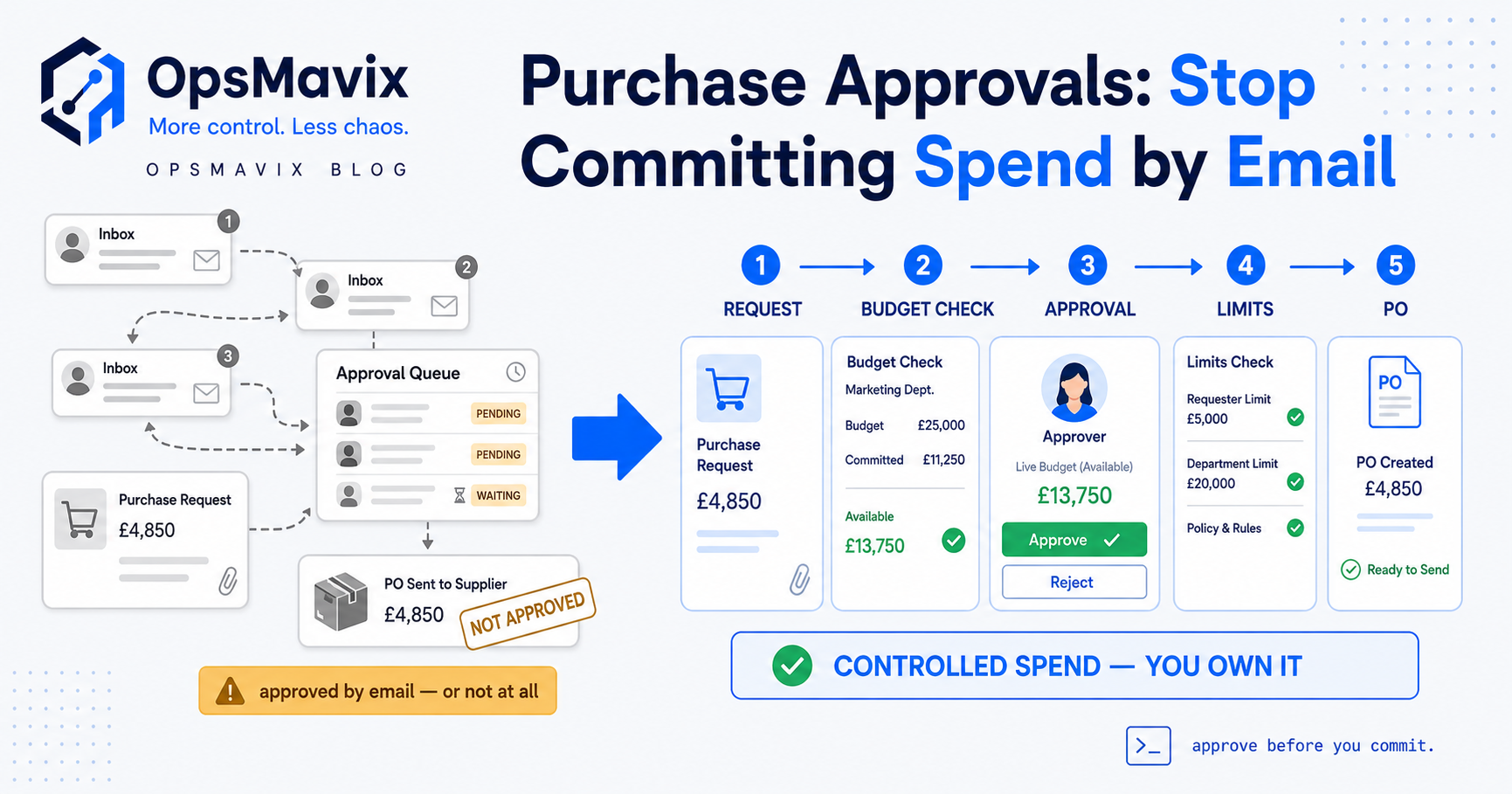
The Purchase Requisition Process: From Request to Approved PO
The purchase requisition process is the request-to-buy workflow that runs before any money is committed — raise the request, check the budget, route it to the right approver, escalate what's over a limit, and convert the approved request into a purchase order. This is the step-by-step version: what each stage does, what a good request captures, and exactly where the process leaks money when it runs on email and memory instead of a system.
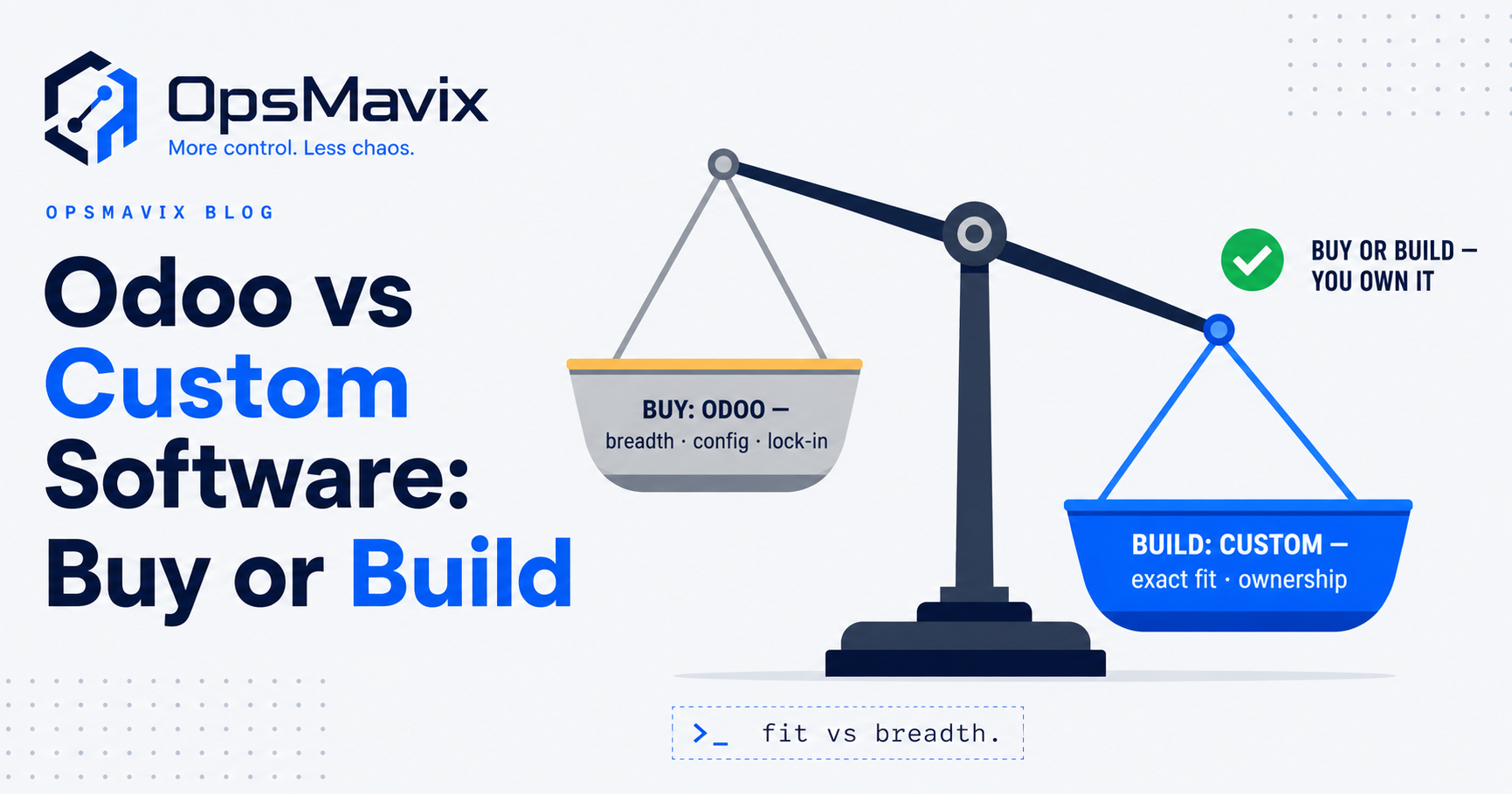
Odoo vs Custom Software: The Buy-or-Build Decision
Odoo vs custom software isn't a fight between a good tool and a bad one — it's a trade between breadth you buy and fit you build. Odoo gives you a huge, mature suite and an ecosystem behind it; a custom operations system gives you an exact match to how you work and outright ownership. Here's an honest framework for the buy-or-build call — what each genuinely wins on, the costs and risks over time, and how to decide without over-buying or over-building.
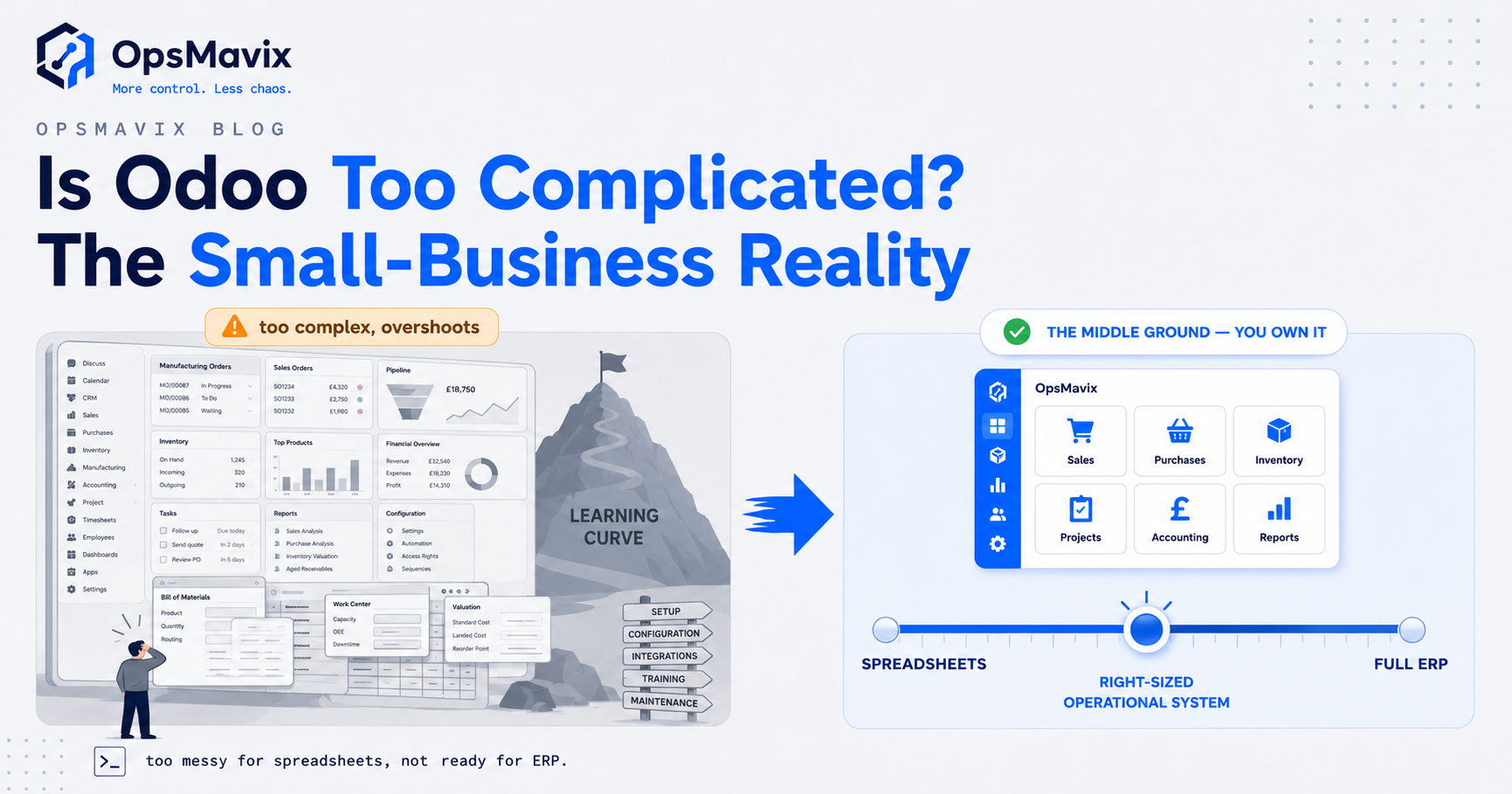
Is Odoo Too Complicated? The Small-Business Reality
Is Odoo too complicated for a small business? Often, yes — not because it's bad software, but because it's a full ERP suite aimed at a business bigger than the one asking. This is an honest look at why Odoo feels heavy for SMEs, the config and admin curve nobody quotes you upfront, the middle ground most small businesses actually sit in, and how to choose without over-buying a suite you'll use a fraction of.
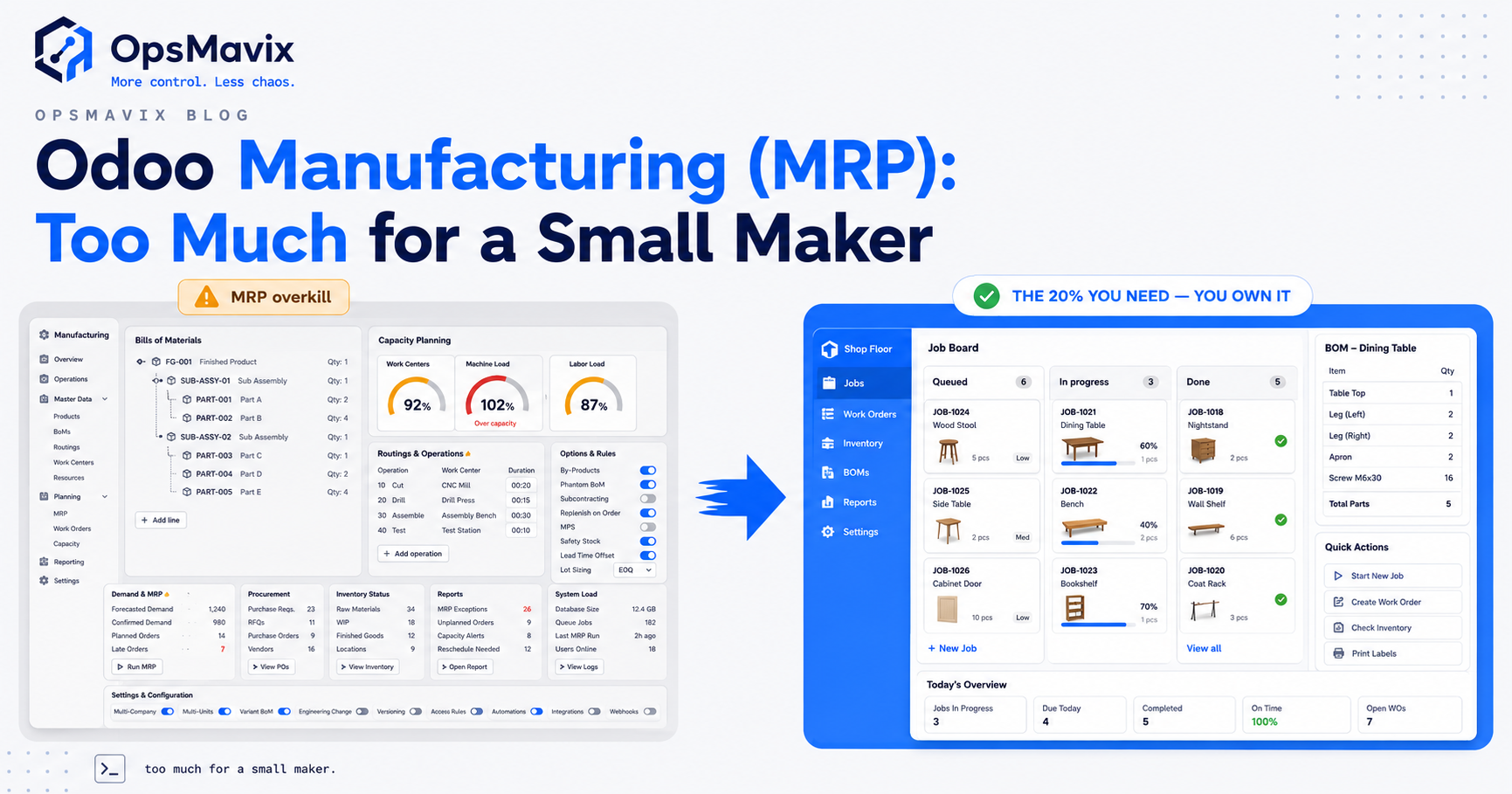
Odoo Manufacturing (MRP): When It's Too Much for a Small Maker
Odoo Manufacturing (MRP) is a genuinely capable production suite — multi-level BOMs, work orders, routings, capacity planning, shop-floor and quality apps. That depth is the point for a complex factory, and the problem for a small maker. This post covers what Odoo MRP actually does, the complexity threshold where it earns its keep, the setup burden it lands on a small shop, and the focused parts most makers actually need instead.
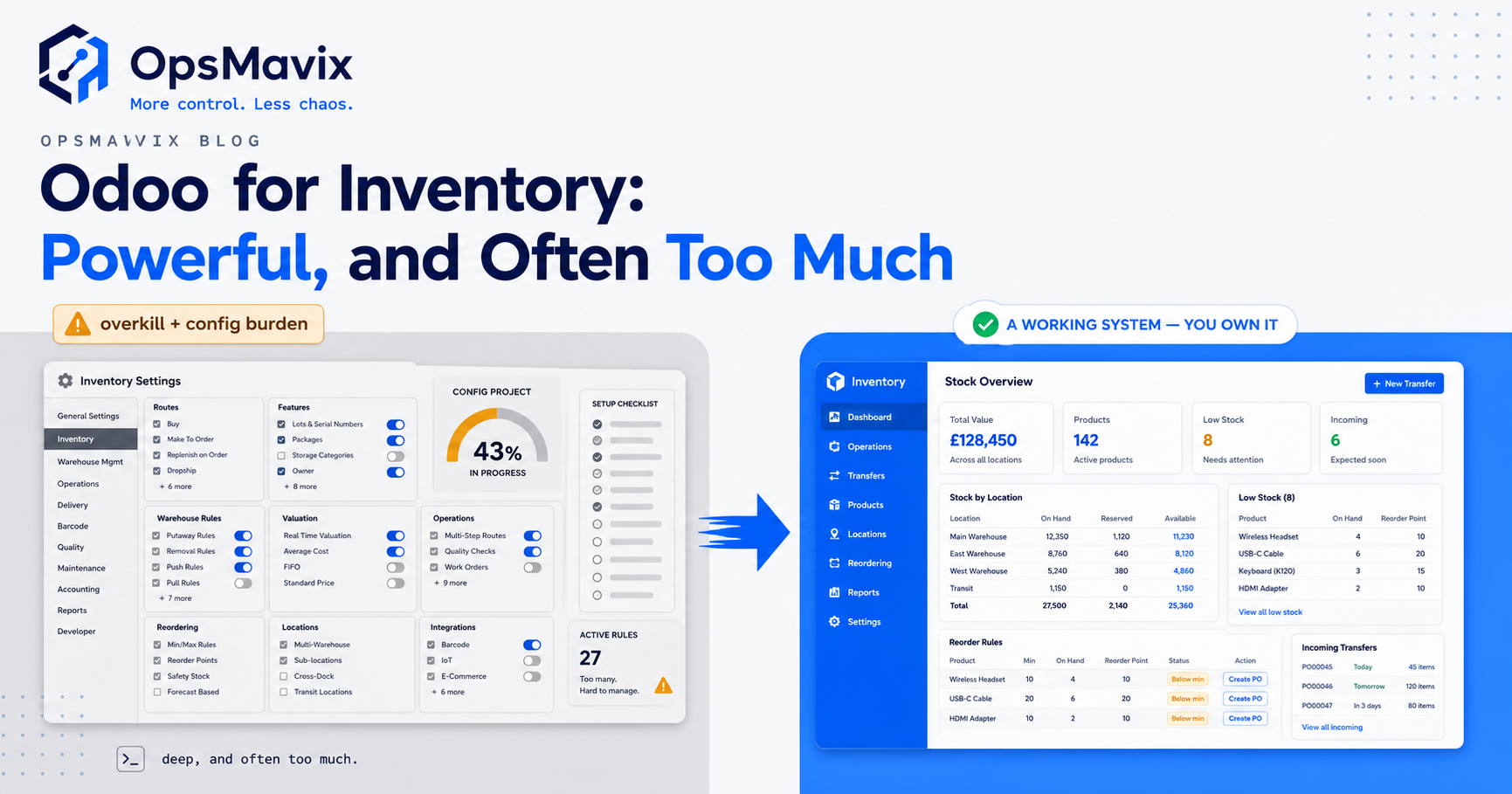
Odoo for Inventory: Powerful, and Often Too Much
Odoo Inventory is a genuinely deep stock and warehouse module — routes, putaway rules, multi-step flows, reordering, lot and serial tracking, the lot. The trouble for a smaller business isn't capability, it's fit: you inherit a configuration project instead of a working system, get warehouse-grade depth where you needed a clear count, and awkward gaps where your operation is actually specific. Here's what Odoo Inventory really does, where it overshoots an SME, and what a right-sized stock system does instead.
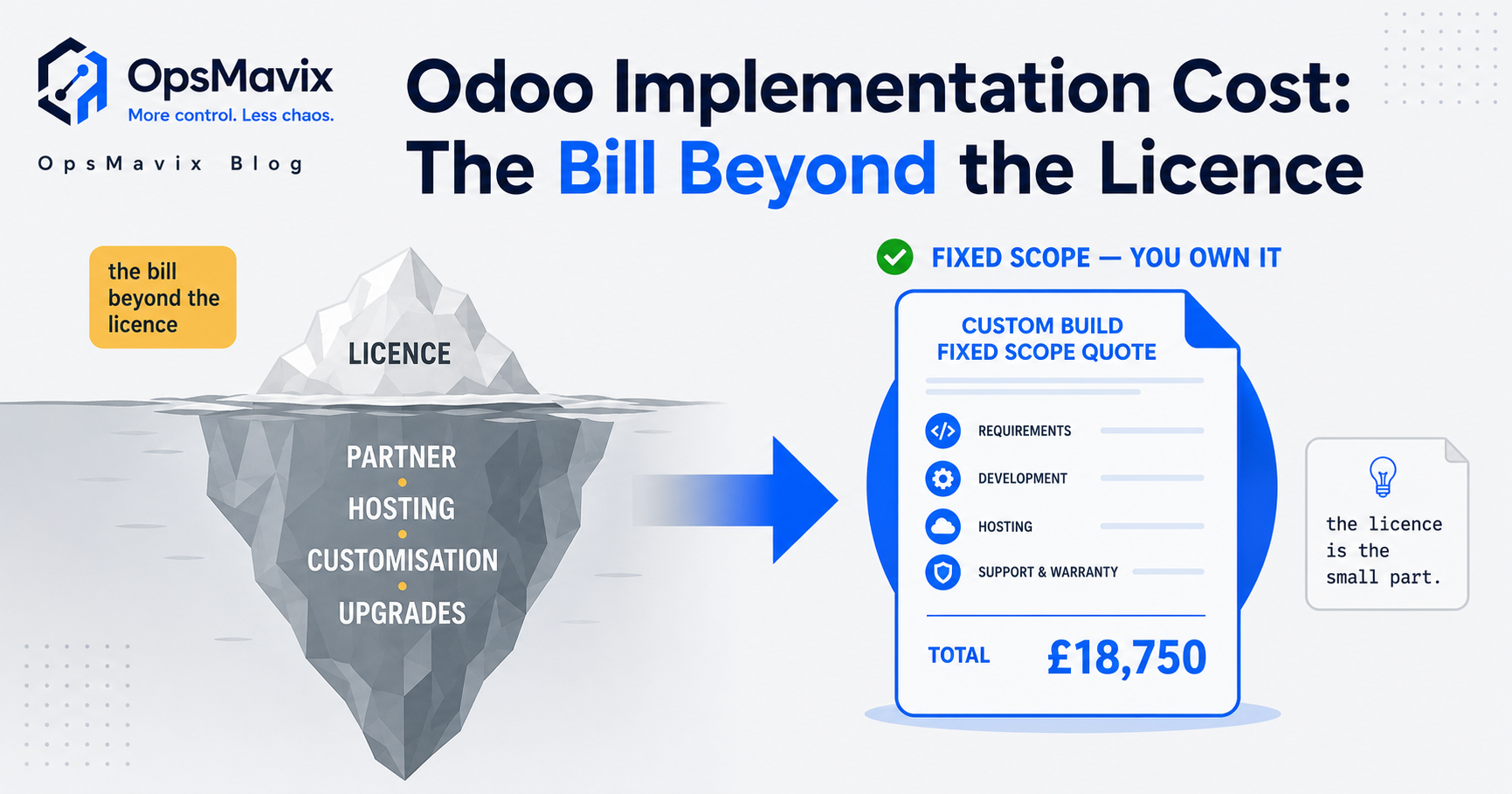
Odoo Implementation Cost: The Bill Beyond the Licence
The Odoo implementation cost people quote you is the per-user licence — the small, predictable part. The real bill is the partner implementation, the customisation to make it fit, the hosting, the third-party apps, and the upgrade tax you pay every version. Here's how the cost is structured, why an open-ended config project drifts, and how to compare it fairly against a fixed-scope custom build.
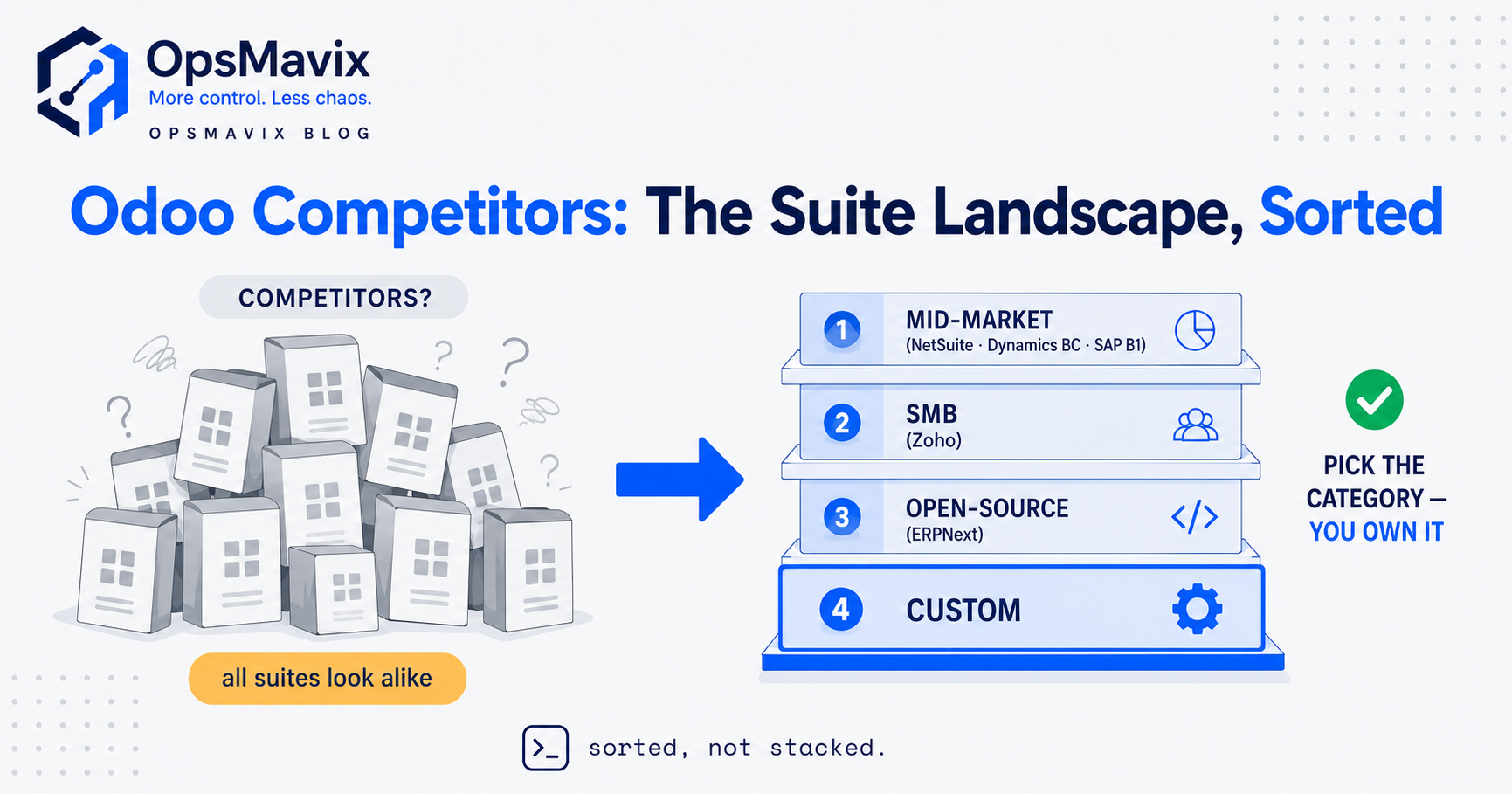
Odoo Competitors: The Suite Landscape, Sorted (and Where a Build Fits)
Odoo competitors aren't one list — they're different categories of suite answering different questions. Mid-market ERPs like NetSuite, Dynamics 365 Business Central and SAP Business One sit above SMB suites like Zoho One and open-source options like ERPNext. This is an even-handed map of who each one suits and where it stops, why picking the category matters more than any feature comparison, and where a right-sized custom operations system fits for firms that don't need the whole suite.
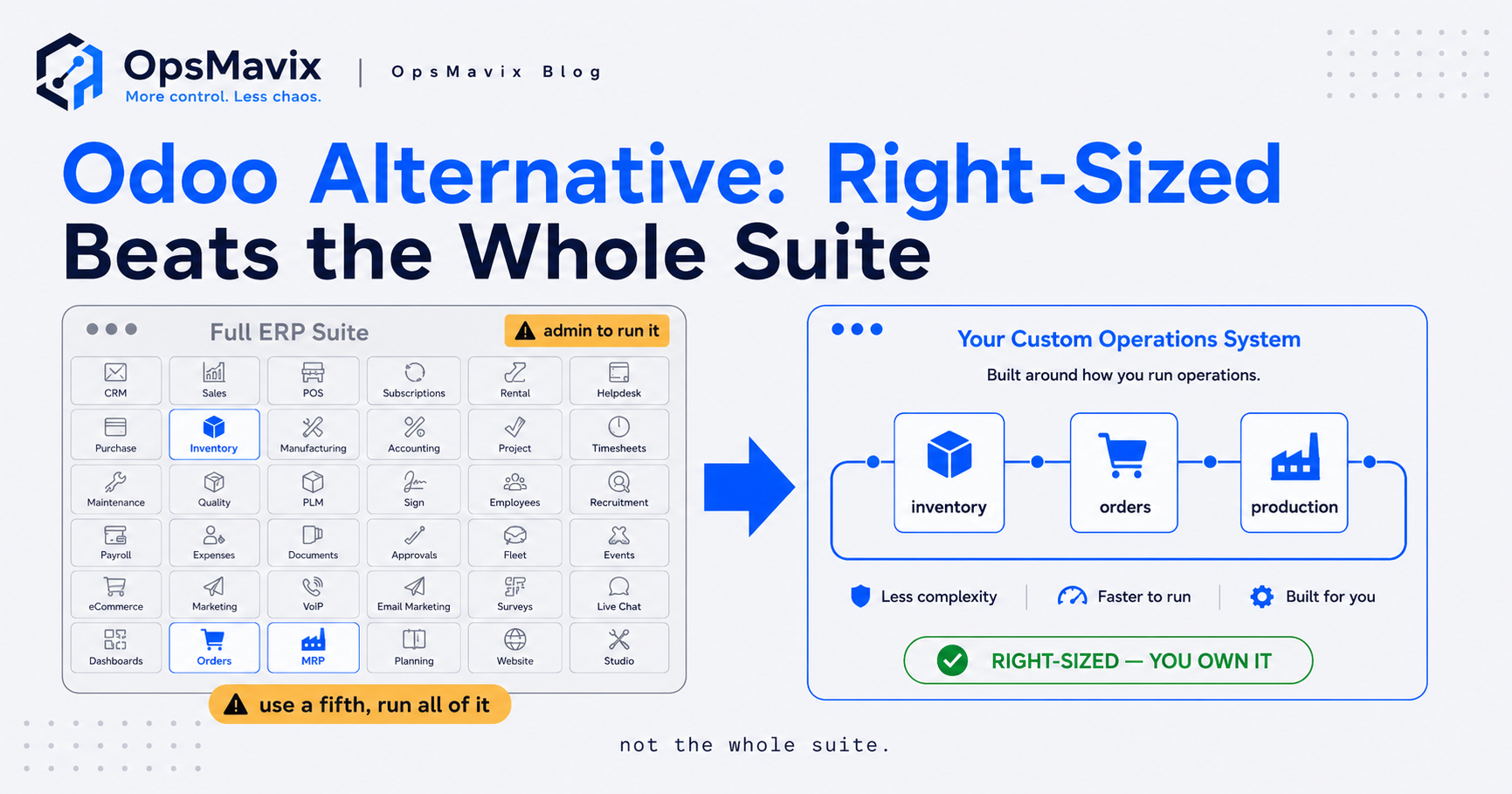
Odoo Alternative UK: Right-Sized Beats the Whole Suite
An Odoo alternative isn't a cheaper version of the same thing — it's a different answer to the question. Odoo gives you a suite of dozens of apps, most of which you'll never switch on, plus the admin of running them. A focused custom operations system covers what you actually do without the suite overhead. Here's where Odoo genuinely fits, the run-cost most buyers miss, and how to decide.
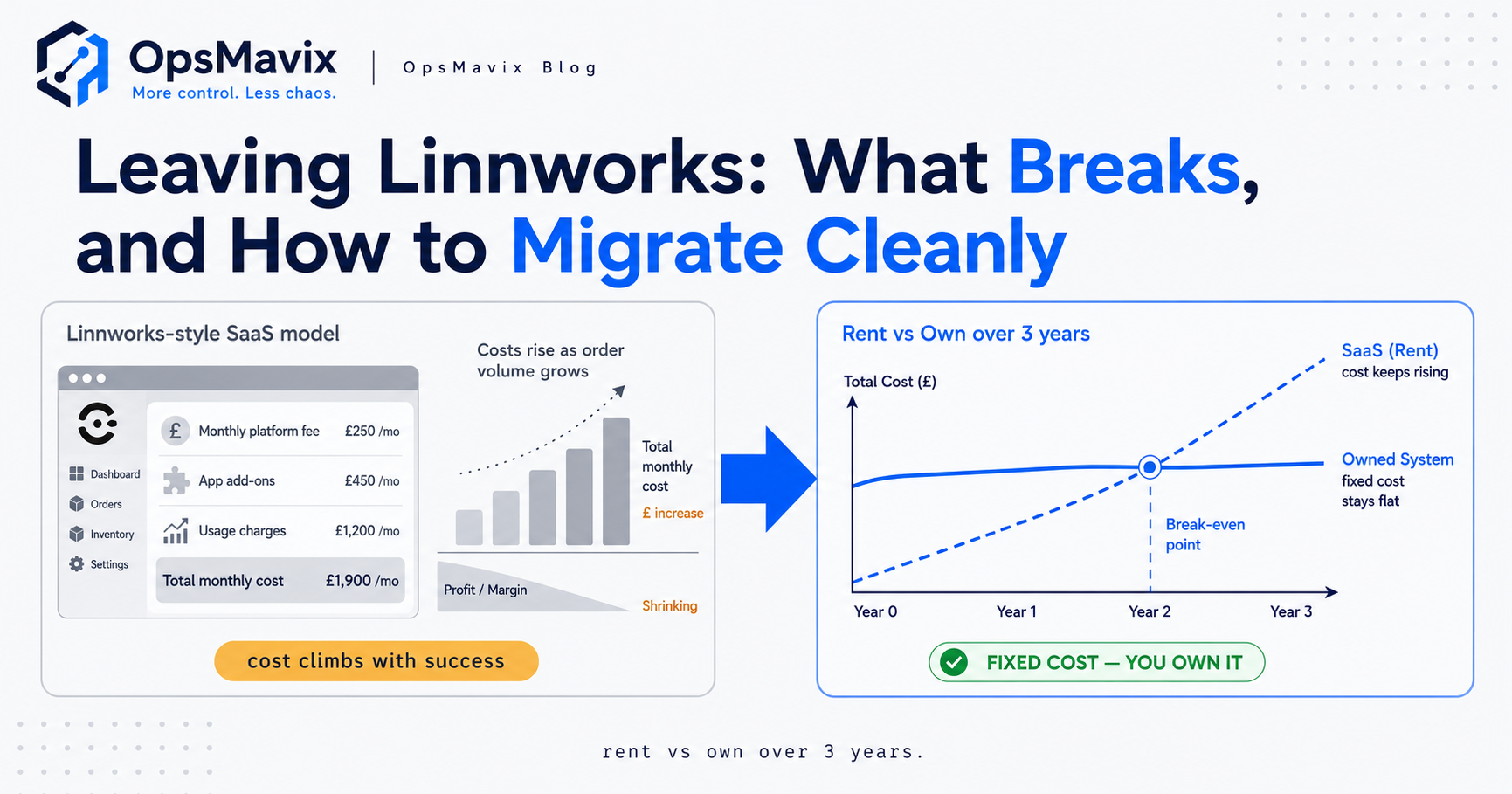
Leaving Linnworks: What Breaks, and How to Migrate Cleanly
Linnworks problems tend to build slowly — a workaround here, a stock figure that won't reconcile there — until moving off starts to look like the only fix. This is the honest exit guide: which pains are fit versus config, what to export before you leave, how to map your data into a new system, and how to run a phased cutover without losing history or throwing your stock into chaos.